-
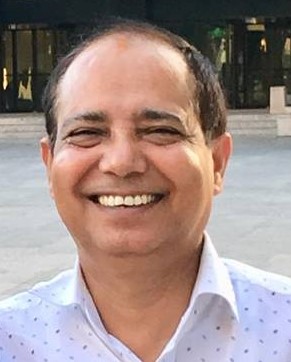
Prof. Dr. Medani P. Bhandari
Prof. Medani P. Bhandari holds PhD and Masters in Environmental Sociology, Syracuse University, New York, USA, Masters in Sustainable International Development, Brandeis University, Massachusetts, USA, MSc. Environmental Systems Monitoring and Analysis, ITC- The University of Twente, the Netherlands, M.A. Anthropology, Tribhuwan University, Nepal, Diploma in Endangered Species Management, Kent University, United Kingdom, PG Diploma Ecology and Environment, IIEE, India, Diploma in Environmental Education, Centre for Environment Education – Nehru Foundation for Development, India and certified UNFCCC roster expert.
Prof. Bhandari is a widely recognized humanitarian, professor, author, and editor who has significantly contributed to social and environmental sciences. With expertise in forest and park management, social equity, inequality, inclusion, innovation, feminism, sustainability, climate change, and social and environmental policies and management, Prof. Bhandari has dedicated his career to these important areas. In addition to his extensive scholarly work, he is a poet, essayist, and advocate for the environment and social causes. His expertise expands to global and international environmental politics and justice, climate change, sustainable development, public/social policy, the non-profit sector, renewable energy, nature, culture, and power. He has gained field experience across diverse regions, including Asia, Africa, North America, Western Europe, Australia, Japan, and the Middle East. Prof. Bhandari has authored and co-edited several books. Furthermore, Prof. Bhandari\’s creative writing encompasses a vast collection of poems and essays. He has published three volumes of poetry in collaboration with Prajita Bhandari. Prof. Bhandari\’s multifaceted contributions to academia, humanitarianism, and creative writing have solidified his reputation as an esteemed figure in social and environmental sciences, profoundly impacting social equity, sustainability, climate change, and beyond. Professor Bhandari holds five master’s degrees in social and environmental sciences and a PhD in sociology. He has been actively involved in environmental conservation and humanitarian efforts through nonprofit and academic platforms. Guided by the philosophy that all living and non-living beings are interconnected (“Vasudhaiva Kutumbakam”) https://ologyjournals.com/aaeoa/aaeoa_00019.pdf and the principle of “Live and Let Others Live,” https://ologyjournals.com/aaeoa/aaeoa_00020.pdf, his work reflects a deep commitment to the well-being of our planet and its inhabitants. Prof. Bhandari is Editor in Chief of the International Journal- Strategic Planning for Energy and the Environment, https://journals.riverpublishers.com/index.php/SPEE/ and Editor in Chief of the Journal of Environmentalism, Transformation, and Climate Change– https://www.iece.org/jetcc https://www.iece.org/jetcc, Book series editor Social, Urban, Economic and Environmental Sustainability Series– and Chemical and Environmental Engineering Series, River Publishers, Denmark, the Netherlands, USA, https://www.riverpublishers.com/series.php?msg=Social,_Urban,_Economic_and_Environmental_Sustainability_
https://www.riverpublishers.com/bookspubseries.php?sn=Chemical_and_Environmental_Engineering and
Environmentalism – Transformation Acceleration, Nova Science Publisher, New York- https://novapublishers.com/product-category/series/environmentalism-transformation-acceleration/
He is also the UNEP Civil Society Regional Facilitator and the Lead Author of UNEP GEO 7.
https://www.amazon.com/Books-Medani-P-Bhandari/s?rh=n%3A283155%2Cp_27%3AMedani+P.+Bhandari
https://novapublishers.com/?s=medani+bhandari&post_type=product (books link)
-
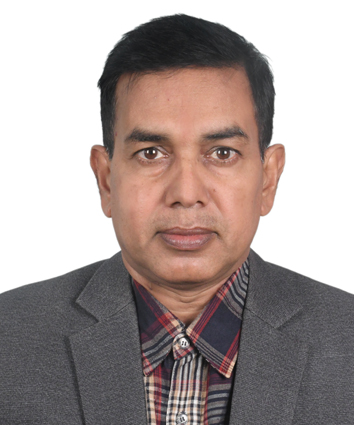
Mr. Vijay Prasad Kesari
Vijay Prasad Kesari is a development and environmental management professional with over 20 years of extensive national and international experience in climate change, sustainable energy, biodiversity conservation, forestry, disaster risk management, and natural resource governance. Throughout his professional career, he has worked with leading international organizations including UNDP, UN Women and SNV Nepal, contributing to high-level regional and global initiatives across Asia, the Pacific, and the Middle East. He has provided strategic leadership in the design and implementation of programmes related to climate adaptation and mitigation, renewable energy transition, ecosystem-based adaptation, biodiversity finance, water governance, and resilient development planning. He has also contributed significantly to resource mobilization, policy formulation, programme evaluation, and international partnerships supporting sustainable development goals. He has participated in numerous international conferences, workshops, and policy dialogues related to forestry, biodiversity, climate change, and natural resource management across different countries.
As a Member of the Board of Directors of Kathmandu Forestry College, Mr. Kesari is committed to promoting academic excellence, research, innovation, and professional leadership in forestry and natural resource management education. He strongly believes in integrating practical experience, policy engagement, and global perspectives into higher education to prepare future professionals capable of addressing emerging environmental and climate challenges.
-
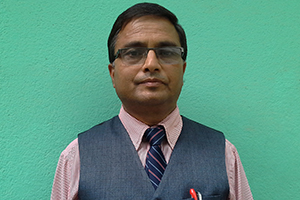
Mr. Shiv Shankar Neupane
Mr. Shiv Shankar Neupane has expertise in Community forestry, Livelihoods and income generation, Soil conservation and watershed planning, Community / Rural development, Forest Protection.
The courses taught at KAFCOL are:
M.Sc. NRM-RD
Landscape Management and Biodiversity Conservation
B.Sc. Forestry
Forest Protection
Diploma in Forestry
Community Forestry, Forest Protection
-
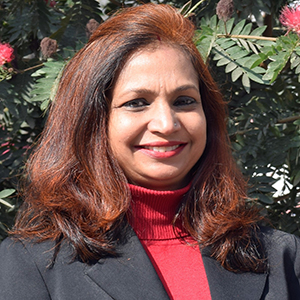
Ms. Leena Sah
Ms. Leena Sah has experience in Environment management, Ecology, Climate Change, Wastewater. The major courses taught:
B.Sc. Forestry
PWM 114: Wildlife, Protected Areas and Ecotourism
SFB 122: Forest Ecology
WME 411: Environmental Management
Diploma in Forestry
DIF 1st Year: Zoology
DIF 3rd year: Extension Education
-

Ms. Liza KC
Ms. K.C. is a Forestry professional with a Master’s degree in Mountain Environment and Development Studies and a Bachelor’s degree in Forestry, with specialized coursework and applied research in soil conservation and engineering, watershed management, and soil-plant relationships. Combines hands-on teaching experience — as a full-time lecturer, program coordinator, and assistant professor responsible for Soil Conservation and Watershed Management / Forest Protection curricula — with field research on soil properties, allelopathy, and land degradation, and professional work in knowledge management and MRV for a World Bank-funded REDD+ program. Skilled in translating technical soil and watershed science into curriculum design, training delivery, and field-based capacity building for students and community stakeholders.
-

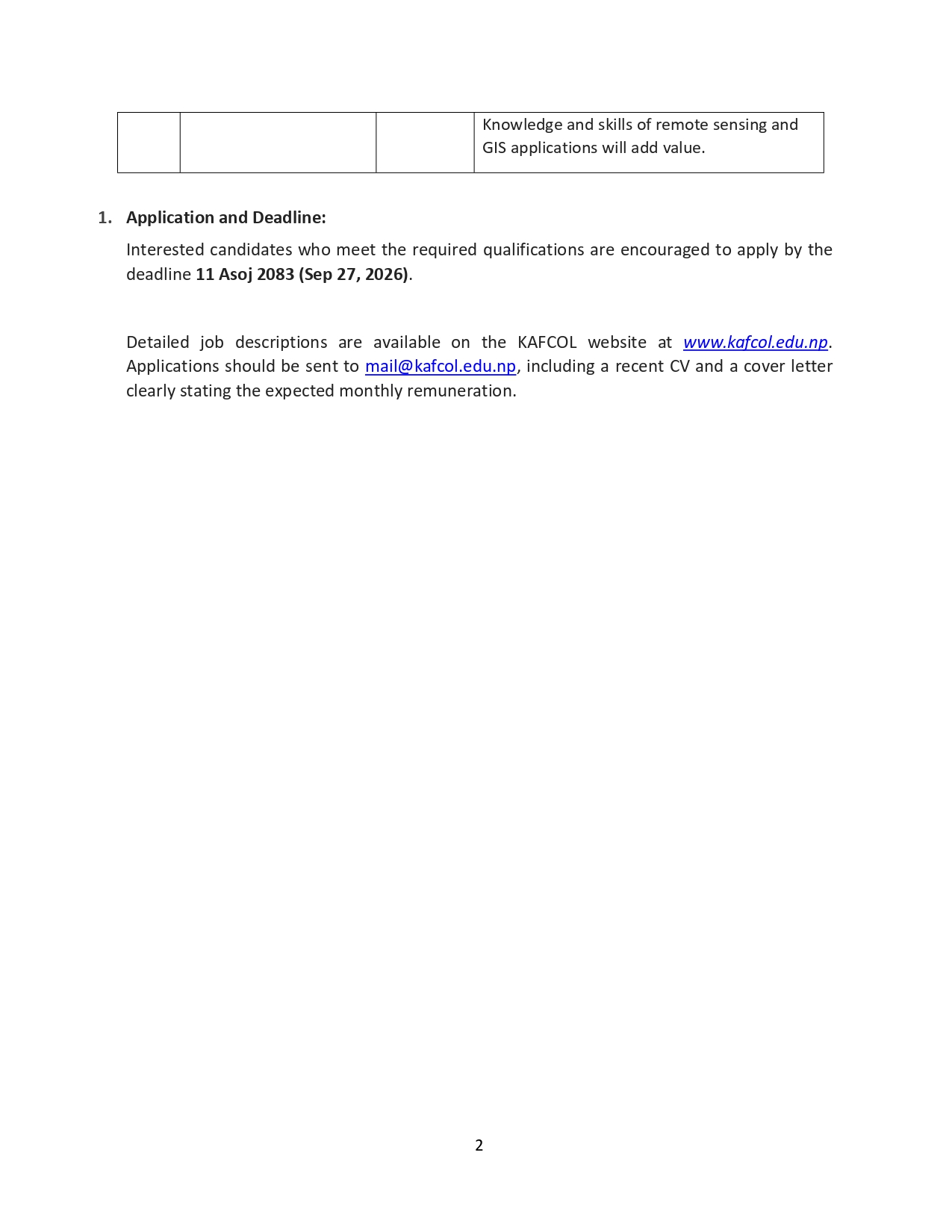
In the process of hiring