Members of Board of Directors for 3 years ( 2082 -2085)
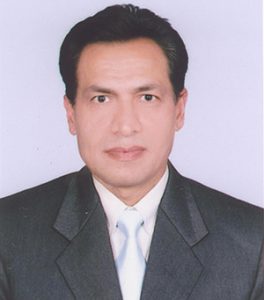
Prof. Dr. Ambika Prasad Gautam
Chairperson
Professor Dr. Ambika P. Gautam has an MSc and PhD in Natural Resources Management (NRM) from the Asian Institute of Technology (AIT), Thailand, and a Postgraduate Diploma in Forest Survey from the International Institute for Geo-Information Science and Earth Observation, the Netherlands. Dr. Gautam is a NRM professional and academician with over 35 years of experience in developing, managing, and implementing NRM programs and teaching NRM and forestry subjects in reputed universities in south and south-east Asia. Prior to joining Kathmandu Forestry College as a professor, he worked for the International Centre for Integrated Mountain Development (ICIMOD) as the Program Manager and Country Representative for Afghanistan, and a faculty member in AIT, Thailand. He also taught graduate NRM courses in other reputed universities in south and south-east Asia as a visiting faculty. Intermittently, he has been working as a consultant (national and international). Some of his current or recent international assignments include (i) Judge, Adaptation at Scale Prize, IMC Worldwide Ltd., United Kingdom; (ii) Member, Regional Advisory Committee, Asia Pacific Forest Carbon Partnership Facility (FCPF) Capacity Building Project on REDD+; (iii) Lead Author, Intergovernmental Science-Policy Platform on Biodiversity and Ecosystem Services (IPBES) for the (a) Regional (Asia-Pacific) and (b) Global Assessment of Biodiversity and Ecosystem Services, and (c) Transformative Change Assessment; (iv) International Forest and Biodiversity Specialist, FAO Afghanistan; (v) Terrestrial Biodiversity Expert (Protected Areas and Forestry), Preparation of Nepal’s National Biodiversity Strategy and Action Plan (NBSAP; 2024-2030), UNDP and Ministry of Forest and Environment (MOFE), Government of Nepal (GON); and (v) Technical Reviewer, IUCN World Conservation Congress, Hawaii 2016. Similarly, some of his recent assignments or projects in Nepal include: (i) Member, IPBES National Expert Team; (ii) Member, REDD Working Group, MOFE, GON; (iii) National Consultant, Designing of Project Document for Facilitating the Pursuit of Sustainable Development Goals in Nepal, UNDP (iv) Team Leader, Development of NBSAP (2014-2020) and the Fifth National Report to CBD funded by GEF/UNEP and implemented by Ministry of Forest and Soil Conservation, GON; (v) Theme Leader, Nature Conservation National Strategic Framework for Sustainable Development for the National Planning Commission and IUCN Nepal; (vi) Team Leader, Rapid Assessment of Chitwan-Annapurna Landscape in Central Nepal for USAID-funded Hariyo Ban Program implemented by WWF Nepal; and (vii) Consultant, National Capacity Self-Assessment (biodiversity and cross-cutting themes) for UNDP and the Ministry of Environment, Science and Technology, Government of Nepal (GEF-funded). Earlier, he spent several years with the Government of Nepal as a district level forest manager. He has also worked as the Principal Investigator in a Ford Foundation-funded research project and organized and chaired a panel in an international conference in Bali, Indonesia. Dr. Gautam has published around 65 articles in refereed international journals, book, an encyclopedia, and proceedings of international conferences and served as a member or chair of seven doctoral and more than 50 masters’ theses research advisory committees in different universities in Thailand, Nepal and India. Since 2004, he is acting as a peer reviewer for around 35 international scientific journals published by reputed international publishers, including Elsevier, Springer, and Taylor & Francis, and has been serving as external examiner of doctoral and Masters theses. He is a member of several NRM-related international professional organizations and networks, including the IUCN CEESP, and International Association for the Study of Commons (IASC).
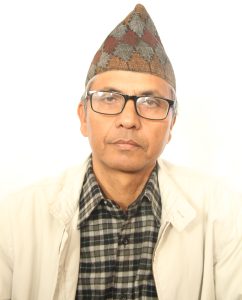
Dr. Ramji Prasad Neupane
Member
Dr. Ramji Prasad Neupane holds a PhD in Rural & Regional Development Planning and M. Sc. in Agricultural Systems from Asian Institute of Technology, Bangkok.
His key areas of experience includes Specialization in entrepreneurship and micro enterprise development and TA to Government; Agriculture, rural and regional development planning specialist (PhD); Local Economic Development; Planning, implementation, monitoring and evaluation of development programs and projects; Experience in managing multi-sectoral, multi-donor funded programs and grants management; Design and facilitation of training programs (LED, RBM, GESI, Strategic/Business planning).
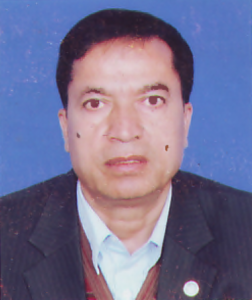
Dr. Bishnu Hari Pandit
Member
Dr. Bishnu Hari Pandit holds a PhD degree in Watershed Management and Development and MSc in Agricultural System from Asian Institute of Technology, Thailand.
His areas of expertise includes Natural resource policy planning, Mapping of natural resources, Geo tagging, Forest Economics, Project evaluation and data base management, negotiation and implementation, Carbon Payment from private forests, Biodiversity Conservation, Climate Change and Environment Management; biochar from waste material, Watershed and Fertility Management, Baseline and Impact studies; Agriculture and Food Security; Resource Economics; Non-timber Forest Products (NTFPs)/Medicinal and Aromatic Plants (MAP) and agroforestry Value Chain and Enterprise Development.
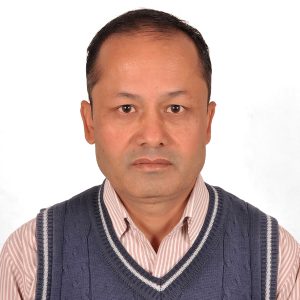
Dr. Shridhar Thapa
Member
Dr. Sridhar Thapa is a development economist with over 20 years of experience in impact evaluation, food security analysis, and resilience programming across humanitarian and development contexts. He currently serves as a Vulnerability Analysis and Mapping (VAM) Officer with the World Food Programme in Nepal, where he leads large-scale assessments, market analyses, and evidence generation to inform policy and programme design. His expertise spans mixed-method evaluation, cash and voucher assistance, market systems analysis, and shock-responsive social protection, with extensive application of tools such as the Minimum Expenditure Basket (MEB) and Proxy Means Testing (PMT).
Dr. Thapa has led numerous national and subnational surveys, impact evaluations, and post-disaster needs assessments, contributing to evidence-based decision-making in food security, climate resilience, and livelihoods. He has also played a key role in strengthening institutional capacity, training over 200 government officials and practitioners in evaluation methodologies, survey design, and data analysis.
In academia, Dr. Thapa has served as a faculty member at Kathmandu Forestry College and as a visiting lecturer at Tribhuvan University and other institutions, teaching courses in microeconomics, macroeconomics, environmental economics, and sustainable rural development.
He holds a Ph.D. in Economics and Management from the University of Trento, Italy, and an M.Sc. in Development and Resource Economics from the Norwegian University of Life Sciences. His research has been published in peer-reviewed journals, including Economies, Journal of Nutrition Science, and the Journal of the Institute of Science and Technology, with a focus on food security, remittances, climate change, and agricultural economics. He is also the co-author of the book Quantitative Techniques, Basic Economics, and Nepalese Economy.
Dr. Thapa is a member of several professional associations, including the Nepal Economic Association and the Econometric Society, and serves on the editorial board of the Nepalese Journal of Agricultural Economics.
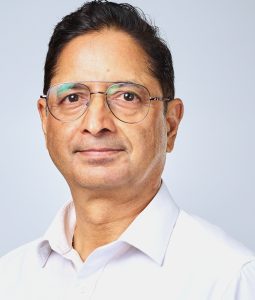
Dr. Shambhu Prasad Dangal
Member
DR. Shambhu Prasad Dangal holds a Ph.D. in Economic Opportunity in Forest Management, Master’s in Resource Management, and in Ecology and Environment, and Bachelor’s in Forestry Science. He possesses over 36 years of professional experience (including 10 years overseas) in forestry and natural resource management, enterprise development, climate change mitigation (REDD+) and adaptation, and livelihood improvement across Nepal, Cambodia, Sri Lanka, and North Korea.
He has an in-depth understanding of forestry and natural resource management (NRM) in South and Southeast Asia, with extensive experience working across government institutions, bilateral projects, international non-governmental organizations (INGOs), and the private sector.
He has significantly contributed to advancing forestry, climate change adaptation, and mitigation, focusing particularly on capacity building for local communities, government and non-government personnel, and the development of national, regional, and local policies, strategies, and plans.
His expertise spans across climate change, forestry, and natural resource management, with strong linkages to livelihoods, environment, poverty alleviation, disaster risk reduction, biodiversity conservation, and regional initiatives addressing these issues in South and Southeast Asia.
His core expertise includes REDD+ (Reducing Emissions from Deforestation and Forest Degradation), Community Forestry and Forest Management, Climate Change Adaptation and Mitigation, Safeguard Policies Development and Review and Agroforestry-based Enterprise/Business Development (including Market Analysis and Development (MA&D)). He also specializes in Capacity Building and Knowledge Management, encompassing capacity needs assessment, program design and delivery, documentation, research/survey design, and dissemination.
In addition, he has extensive experience in Environmental Management, including development and implementation of environmental frameworks, safeguards, and environmental examinations. His competencies also cover Baseline Surveys, Project Reviews, Impact Assessments, Gender Analysis, Project Management, and Livelihood Analysis and Planning.
He has taken a number of classes to masters students in forest management and climate change and also cosupervised a number of masters and bachelor’s degree students research.
He excels in facilitating Community and Enterprise Development, Natural Resource Planning and Implementation, and Policy Development (local to national levels). Moreover, he is skilled in developing outreach materials and effectively disseminating information through various media.
He brings a holistic approach to natural resource management and climate resilience, combining technical expertise, strategic planning, and capacity-building initiatives to deliver sustainable outcomes across diverse socio-environmental contexts.
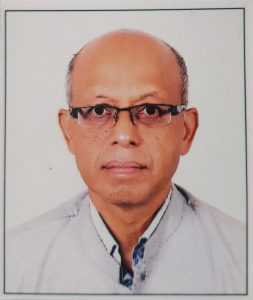
Prof. Dr. Santosh Rayamajhi
Member
Prof. Dr. Santosh Rayamajhi holds Ph.D. in Tropical Forestry and Natural Resource Management, University of Copenhagen, Denmark; M.Sc. in Natural Resource Management, Agricultural University of Norway, Aas, Norway; M.Sc. (AIFC) in Forestry, Forest Research Institute and University, Dehradun, India; Diploma in Energy Planning and Environment, Summer School, Oslo University, Norway.
He held several academic and research positions since 1990. His extensive years of experience includes Project review and evaluation consultant; Project design and planning consultant; Project coordination and implementation consultant; International conferences and workshops facilitation; and Research supervision and publication.

Mr. Kumar Jung Thakuri
Member
Kumar Jung Thakuri is a finance and management professional with more than 30 years of experience in Financial Management and Human resource management in different international nongovernmental organizations, and private companies in senior management level. He has completed his Masters’ degree in Business Studies. He is knowledgeable, skilled, and experienced on strategic thinking & analysis, program development, networking, effective & efficient mobilization of resources along with strengthening the capacity of different level of human resources, overall financial management of the organizations. Currently he is the Chairperson of Medical Service Management Trust Nepal, Dosh Investment Group, Practical Accounting & Management Mart, Hattiban Multiple Cooperative Ltd. He is in the role of Head of Finance & Admin in ActionAid International Nepal since last 3 years.

Ms. Sovita Pariyar
Member
Ms. Sovita Pariyar holds post graduate degree in Environment Management and Sustainable Development from SchEMS College, Pokhara University. She has been continuously working in development sector for last 25 years in various capacities, starting as Ranger in 1996. Over the years, she served many agencies in various projects such as CARE International, DRSP, INFRIN/USAID, LGAF, Scot Wilson, SALGP/SDC, developing herself as Local Governance, GESI and social accountability expert. Prior to joining MTSDI as GESI Expert, Ms. Pariyar provided consulting services as Team Leader/GESI expert for preparation of sectoral plans of municipalities under IUDP and Social Accountability and GESI expert to SASH project, PACT/USAID. She has facilitated numerous trainings, of which training provided on Federal system for elected representatives of municipalities and rural municipalities supported by UNWOMEN, Elected women representatives of Rural municipalities supported by PACT/ USAID, GESI, GRB and Social audit supported by USAID, Training on Result based Monitoring and evaluation, SAGUN/CARE and Civic Education on Constitution to resource persons of World food programme (WFP) are to name a few. In recognition to her continuous effort for social change, Dr. Ambedkar Sahiytik Academy felicitated her with Dr.Ambedkar Sewa Shree Award in 2013. Her professional association includes life time member of Nepal Ranger Association (RAN), Federation of Dalit Women (FEDO), Women, Children and Environment Development Centre (WOCHEN), Makawanpur, Samuhik Multipurpose Service Centre (SMSC) and Kathmandu Training Center.
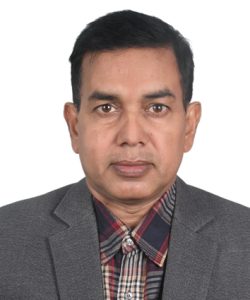
Mr. Vijay Prasad Keshari
Member
Vijay Prasad Kesari is a development and environmental management professional with over 20 years of extensive national and international experience in climate change, sustainable energy, biodiversity conservation, forestry, disaster risk management, and natural resource governance. Throughout his professional career, he has worked with leading international organizations including UNDP, UN Women and SNV Nepal, contributing to high-level regional and global initiatives across Asia, the Pacific, and the Middle East. He has provided strategic leadership in the design and implementation of programmes related to climate adaptation and mitigation, renewable energy transition, ecosystem-based adaptation, biodiversity finance, water governance, and resilient development planning. He has also contributed significantly to resource mobilization, policy formulation, programme evaluation, and international partnerships supporting sustainable development goals. He has participated in numerous international conferences, workshops, and policy dialogues related to forestry, biodiversity, climate change, and natural resource management across different countries.
As a Member of the Board of Directors of Kathmandu Forestry College, Mr. Kesari is committed to promoting academic excellence, research, innovation, and professional leadership in forestry and natural resource management education. He strongly believes in integrating practical experience, policy engagement, and global perspectives into higher education to prepare future professionals capable of addressing emerging environmental and climate challenges.